Early in my leadership career, a colleague came to me for help. I was overwhelmed, stretched thin, running on empty. Instead of taking a breath and getting curious about where they were at, I reacted.
The damage was quick. The relationship never fully came back. We both tried to rebuild the respect, but it was never the same.
That is when I had to learn something that should have been obvious. The moment before you react is where your leadership lives. It did not come quickly. It took study sessions, some counselling, and a fair bit of honest reflection.
This is my story. But it is not unique.
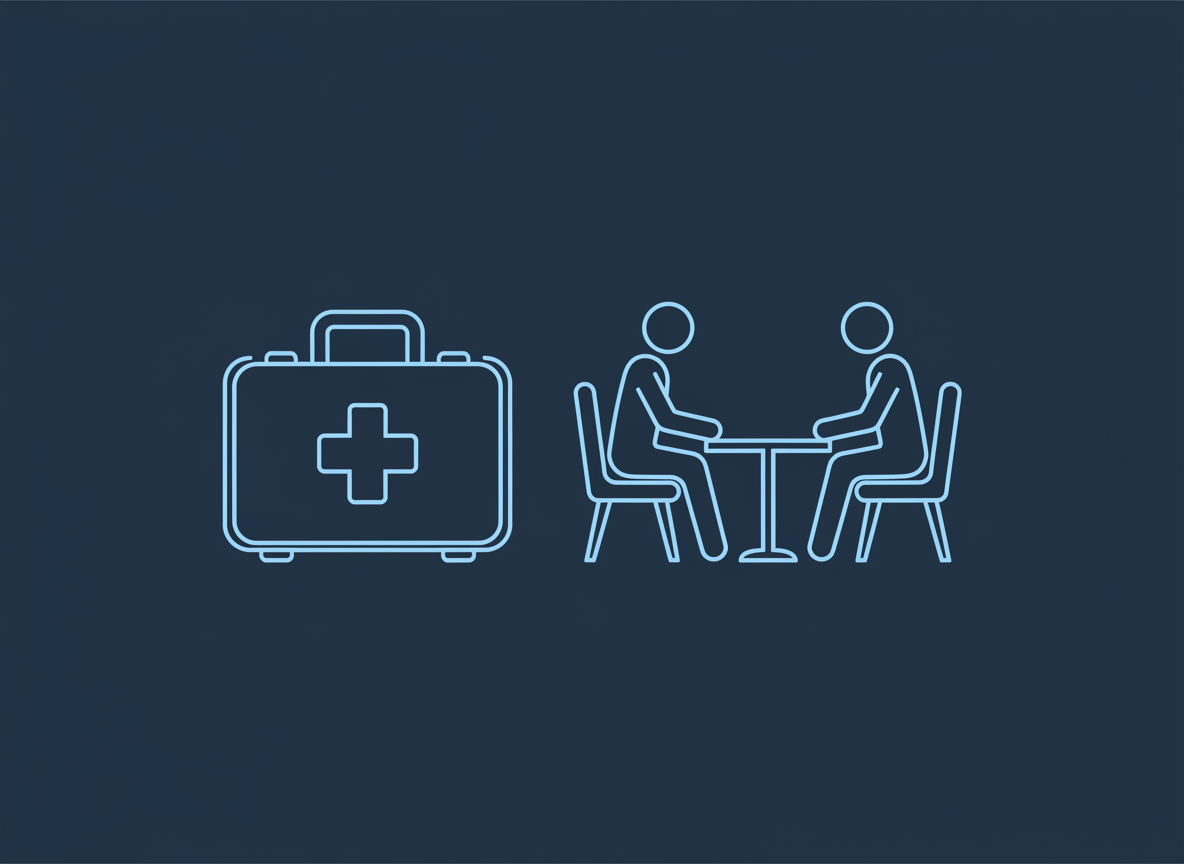
We invest heavily in training people for emergencies they will rarely face. We build systems, regulations, and accountability around the rare moment. Meanwhile, the skill that decides whether someone speaks up, stays, or checks out entirely is left almost entirely to chance.
That gap is the whole problem. Psychological safety at work is the thing that lets people show up, speak up, and actually stay. And too often we leave it to chance.
We have built a system around physical safety
Look at how seriously we take physical harm at work.
Regulations. Manual handling training. Risk assessments. Hazard reports. Sign off sheets. Whole roles dedicated to making sure people do not get hurt. When it comes to protecting the body, we do not leave it to chance.
Now look at the other side.
Psychological safety gets talked about. It is on the values poster. It comes up in the staff survey. Everyone agrees it matters. But where is the structure? There is no assessment for whether a team knows how to give honest feedback. No refresher training for navigating a hard conversation. No risk register for a culture where people are too afraid to speak up.
And people feel the gap. In a 2025 employee safety report, 96 percent of workers said physical safety mattered to them, and 95 percent said the same about their mental health. Nearly identical. But the investment in each is not close.
Here is the thing though: psychological safety makes physical safety work
This is the part I keep coming back to.
Why did we build all those physical safety systems in the first place? Because something went wrong. Someone got hurt. And often the warning signs were there before the injury. A near miss nobody reported. A concern nobody felt safe raising. A better process someone had spotted but never said out loud.
So we built the rules to catch what people were not comfortable saying out loud.
Now think about what happens when people actually feel safe to speak. They report the near miss before it becomes an injury. They own the mistake while it is still fixable. They flag the better way instead of staying quiet.
Psychological safety is not competing with physical safety. It strengthens it. When people feel safe enough to be honest, you catch problems earlier, you learn from mistakes instead of hiding them, and you build a culture where the rules actually get followed because people understand why they are there.
Victoria has now made this the law
Here is where it stops being a nice idea and starts being an obligation.
On 1 December 2025, the Occupational Health and Safety (Psychological Health) Regulations 2025 came into effect for every Victorian employer. In plain terms, the law now asks employers to identify and manage psychosocial hazards at work with the same rigour as physical ones.
That is the exact shift this whole article is about, now written into legislation. Bullying, aggression, high job demands, poor support, unclear roles, poor handling of change. These are named as psychosocial hazards. Employers are now expected to have a plan for each of them.
One honest point, because I would rather you hear it from me. The regulations are clear that training on its own is not the answer. Good work design comes first: fair workloads, clear roles, and supportive management. Training works best on top of that foundation, not as a substitute for it.
Either way, the direction is set. Psychological health is now safety, and safety is now compliance.
Knowing something is not the same as doing it
Here is the part that ties it all together.
You can do a first aid course, then freeze when a real emergency hits, because you have not touched it in three years. Knowing the steps on paper is not the same as performing them under pressure.
Human skills are exactly the same. You can sit through a one-off workshop on communication. You can nod along to a slide about active listening. Then you walk into a heated moment with a colleague and everything you heard evaporates.
We need these skills most in the hard moments. And the hard moment is the one thing we never train for.
That is exactly what a well-designed team culture workshop should be built around: not just insight, but genuine practice in the situations your team actually faces.
The numbers show there is room to move
This is not just a hunch. The data backs it up, and it is close to home.
Safe Work Australia reported in October 2025 that mental health conditions now make up about 12 percent of all serious workers compensation claims, and the median time off work for those claims is almost double that of physical injury claims. That is not a soft number. It is a direct cost, showing up on the balance sheet.
Here is the other pattern worth noticing. Most organisations respond to all this after the fact. We fund support once people are already struggling. We are far slower to build the everyday skills that stop the problem from developing in the first place.
Psychological safety starts with you
You do not need a policy change to start. Psychological safety is often built or broken in small moments, and most of those moments are yours. Here are three simple things you can practise this week.
Name the pressure before you react. When you feel the heat rising, pause. One breath. Notice what is happening in your body before you open your mouth. That tiny gap is where a calm response lives instead of a reactive one. When people see you hold steady under pressure, they start to believe they can be honest with you.
Make it safe for one person to be honest with you. Ask a colleague what they really think about something, then listen without defending yourself. The test is not asking the question. It is how you handle the answer.
Have the small conversation early. Most big, painful conversations started as a small one nobody wanted to have. Say the thing while it is still little. A quiet word today is far easier than a blow up next month.
None of this is complicated. But simple is not the same as easy, and easy is not the same as practised.
For a real team conversation where these moments played out, read the companion post on what psychological safety looks like in practice.
Calm is a skill. So is speaking up.
We practise the things we decide matter.
We decided physical safety mattered, so we built training, structure, and habits around it. Victoria has now decided psychological safety matters too. Maybe it is time the rest of us made the same call in our own teams.
These are not soft skills. They are the skills people use most, in the moments that matter most. That is worth practising. I learned that the hard way, and I would rather you did not have to.
What is one daily human skill your workplace has never actually trained you for?
Frequently asked questions
What is psychological safety at work?
It is the shared belief that you can speak up, ask a question, admit a mistake, or raise a concern without being punished or humiliated for it. The term comes from research by Amy Edmondson at Harvard Business School, and it is now one of the most studied factors in high-performing teams.
What is the difference between physical safety and psychological safety?
Physical safety protects the body through systems, training, and equipment. Psychological safety protects the mind and the relationships at work. Both matter. Both require deliberate effort. And as the Victorian regulations now make clear, both are the employer's responsibility.
Do the new Victorian regulations require this?
The Occupational Health and Safety (Psychological Health) Regulations 2025 took effect on 1 December 2025. They require Victorian employers to identify and control psychosocial hazards in the same way physical hazards are managed. Training alone is not enough under these regulations. Work design, culture, and management practices all need to be considered.
What are human skills, and how are they different from soft skills?
Human skills are the everyday people skills we all use: communication, emotional intelligence, handling conflict, giving and receiving feedback, listening, and leading. I use the term human skills because “soft” implies they are easy or less important. They are not. They are the skills people use most, in the moments that matter most.
How do I build psychological safety if I am not the manager?
Start with your own moments. Pause before you react when you feel the heat. Ask people what they think and respond well when they are honest with you. Have the small conversation before it becomes a big one. Psychological safety is not just a top-down responsibility. Every person on a team builds or breaks it, one moment at a time.
Sources
Related reading
- From Emergency Nurse to Human Skills Trainer: The Story Behind Daniel Halls Co
- Unresolved Conflict Is a Leadership Problem. In Victoria, It's Also a Legal One.
- Soft Skills Training: The 6 Human Skills That Reduce Conflict and Burnout at Work
- Human Skills Training for Melbourne Businesses & Corporate Teams
- Difficult Conversations Still Need to Be Conversations