
Personal Resilience Series: Part 1 of 2
There is a soundproof booth in an audiology clinic in Melbourne.
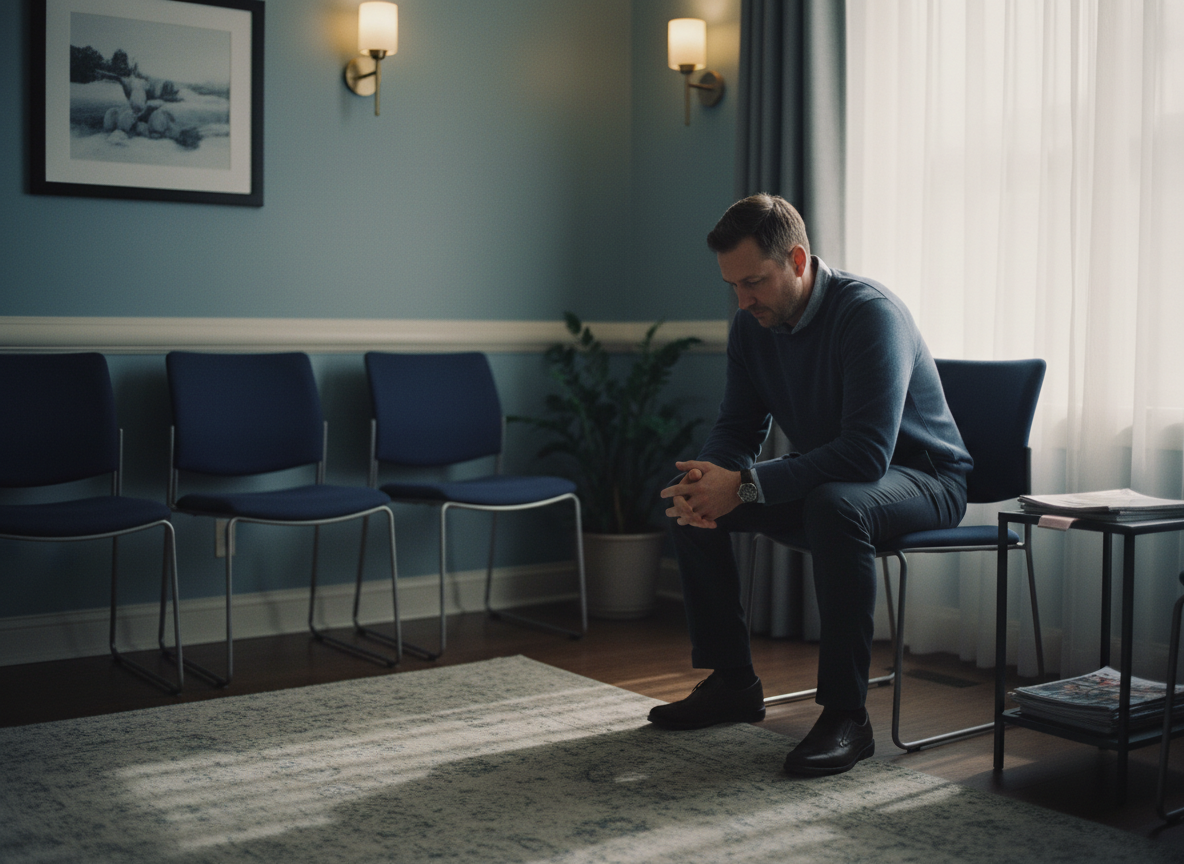
On a Wednesday morning in 2022, I sat in that booth with my six-week-old son on my lap while a specialist ran a series of tests. I watched my son through the glass. He didn't know what was happening. I wasn't sure I did either.
By the end of the appointment, we knew. He has permanent, bilateral hearing impairment. Both ears. And it won't change.
I don't remember everything the audiologist said after that. I remember my son's face. And I remember my wife turning to me and saying: “What's next?”
Two words. And they changed how I think about resilience.
What Is Resilience, Really?
Resilience is the ability to feel the impact of a setback and still choose what comes next. It is not about being unaffected. It is not about toughness, or pretending things didn't hurt, or bouncing back as if nothing happened.
Real resilience is about what you do after the hit lands.
Hugh van Cuylenburg from The Resilience Project describes it simply: resilience is not about avoiding pain. It is about how you move through it. That framing matters. Because if you believe resilience means not being affected, you will spend all your energy pretending, and none of it recovering.
The Green Stick and the Dry Stick
If you bend a dry stick, it snaps. Clean and final.
But bend a green stick, a living flexible one, and it fractures without breaking. It takes damage. It holds the mark of what happened to it. But it holds together.
That is what resilience looks like in practice. The fractures accumulate. They are supposed to. You are not meant to be unbreakable. You are meant to be honest about what you have absorbed, and still find a way forward.
Pretending the fractures are not there does not make you stronger. It makes the next bend more likely to snap you clean.
When Resilience Hands Over to Grit
Here is the distinction that mattered most to me in that clinic: sometimes the setback is permanent.
There is no bounce-back. There is no returning to the same place. The old normal is not coming back. And when that is true, resilience alone is not enough. That is when it hands over to grit.
Angela Duckworth defines grit as passion plus perseverance over the long haul. Her research at West Point found that grit, not talent, not fitness, not intelligence, predicted who finished the gruelling first summer. It was not the people who were strongest at the start. It was the people who kept moving, day after day, through the unglamorous parts.
Grit is not dramatic. It is quiet. It is showing up again when you would rather not. It is the hundred small decisions to keep going when a single dramatic exit would feel easier.
My wife's “What's next?” was not optimism. It was not denial. It was grit showing up as a question.
Emotional Resilience: Naming What You Feel
Before any of this is possible, the resilience, the grit, the next step, you have to know what is happening inside you.
Emotions do not disappear when you ignore them. They accumulate. They come out sideways: through snapping at people you love, through withdrawing when you should be present, through making reactive decisions at the worst possible time.
The research is clear on this: labelling an emotion reduces its intensity. Not removes it. Reduces it. “I'm scared.” “I'm grieving.” “I'm angry and I don't know where to put it.” That small act of naming creates a gap between the feeling and the response.
And in that gap, you get to choose. Name what you feel before it names you.
The STOP Tool
One of the most practical tools I use in my workshops is STOP. It takes less than ten seconds.
Stop
What you are doing. Pause completely.
Take
A breath. A real one. Slow and deliberate.
Observe
What is happening inside you. What is the thought? What is the feeling? Where do you feel it in your body?
Proceed
With intention, not reaction.
You are not suppressing anything. You are giving yourself a moment to move from reacting to responding. That moment, ten seconds, is often all it takes.
Key takeaways
- Resilience is not toughness. It is feeling the hit and still choosing what comes next
- Fractures are meant to accumulate. Acknowledging them is not weakness. It is honesty
- When a setback is permanent, resilience hands over to grit: small, repeated action over the long haul
- Name what you feel before it names you. Labelling an emotion reduces its intensity
- The STOP tool: Stop, Take a breath, Observe, Proceed. Ten seconds between reaction and response
Who you become
At the time of this publishing, our son is four. He recently received a cochlear implant, and like everything else on this journey, it's been both a gift and a challenge. That's the part I've made peace with. The good moments pass, and so do the hard ones. Nothing about this stays still for long.
If you or someone you know is struggling, please reach out.
- Lifeline: 13 11 14
- Beyond Blue: 1300 22 4636
- Black Dog Institute: blackdoginstitute.org.au
- EAP: Most employers offer a free, confidential Employee Assistance Program. Check with your workplace.
Coming in Part 2
Teams break and recover the same way a person does. Next week, we look at what it means to build a resilient team, and what leaders can actually do when things fall apart.
The question for you
Think about the last setback that knocked you sideways. How did you respond in the moment? Did you name what you were feeling, or did you push through without stopping to acknowledge it?
Drop a comment below. And if this landed for you, share it with someone who might need it today.
Personal Resilience Series
- Part 1: Resilience Isn't About Being Tough. It's About What You Do Next. (you are here)
- Part 2: Resilient Teams Don't Ask Why. They Ask What's Next.
Related articles