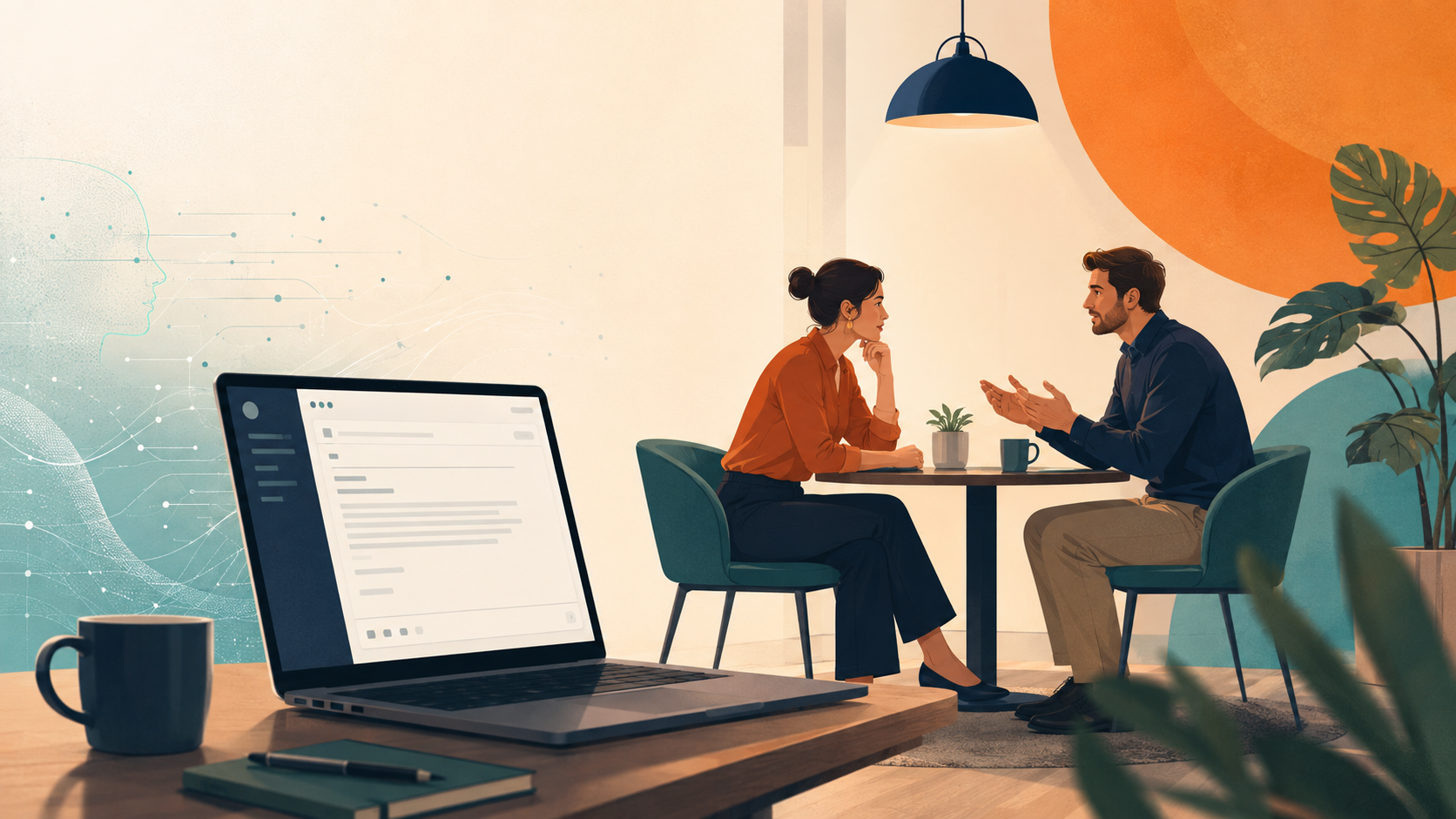
You have probably done this recently. You needed to raise something with a colleague. Something awkward. So you opened an AI tool and asked it to help you word the message.
And it did a good job. Clear. Calm. Professional. You read it back and thought, that is better than anything I would have written at 9pm on a Tuesday.
Then you sat there. Because the message was ready, but you still had to be the one to send it. And more than that, you still had to be the one to have the actual conversation that came after.
That gap is the whole point of this piece. AI has changed a lot about how we work. But workplace conflict management still comes down to a human being willing to sit across from another human being and talk.
Can AI actually help with workplace conflict?
Yes. And I want to be fair about that before I get into the limits.
AI is useful here. It can help you draft a message you have been avoiding. It can structure feedback so it lands clearly instead of as a ramble. It can help you prepare talking points before a hard meeting. It can summarise a long email chain so you can see what actually happened. It can even help you slow down and think through what you actually want to say.
Used that way, it is a good tool. I use it that way.
So this is not an anti-AI piece. The problem is not people using AI. The problem is quieter than that. It is people using AI to avoid building the skills they still need the moment they close the laptop and speak to a real person.
What stays human, no matter how good the tool gets
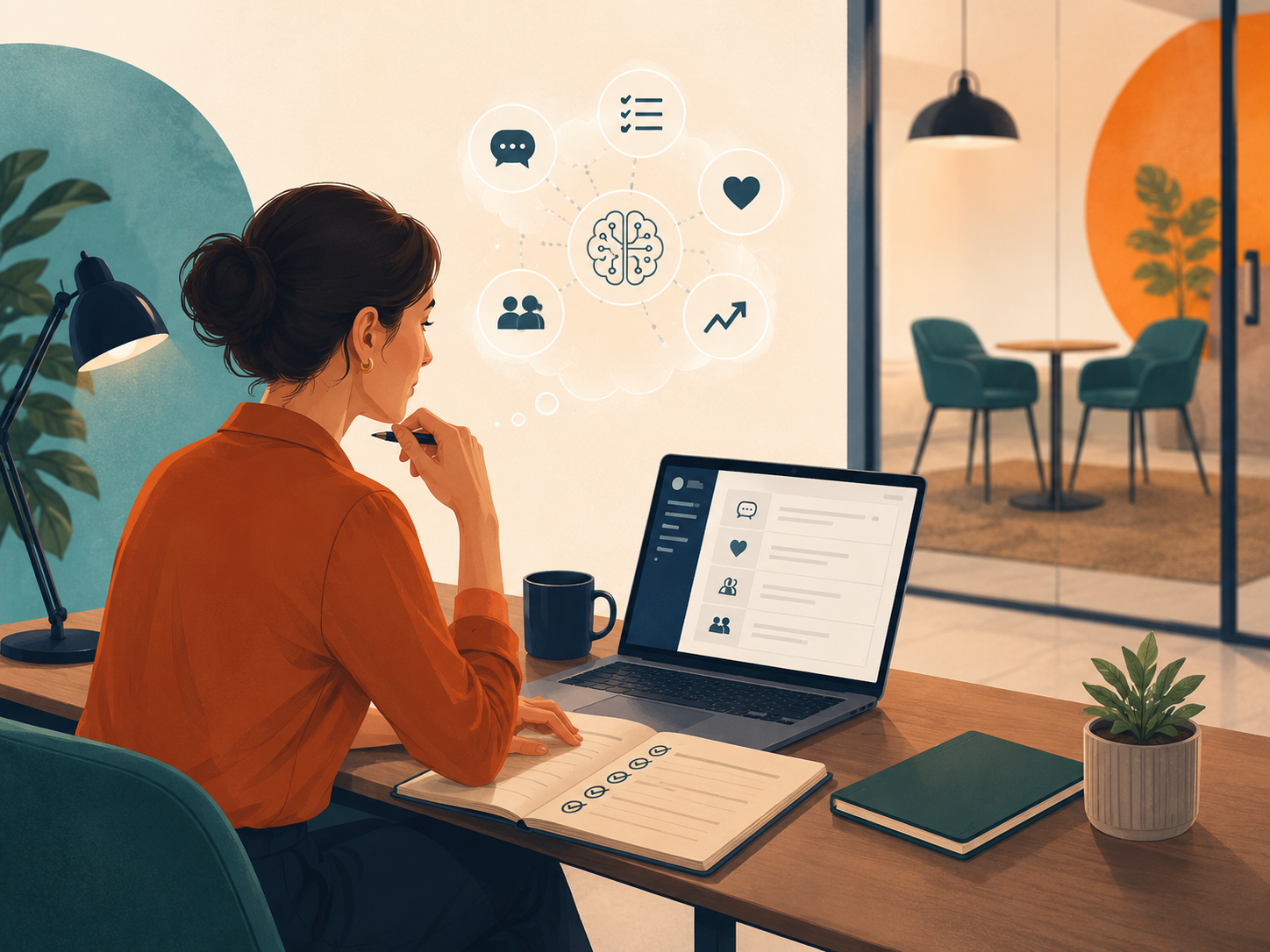
AI cannot read the room. Not the way you can.
It cannot notice the exact moment someone's face changes and something you said landed harder than you meant. It cannot feel the temperature shift when a team goes quiet. It cannot repair trust after a conversation goes sideways. It cannot regulate your emotions for you when your chest tightens and the words are right there, ready to come out wrong.
Those are not writing problems. They are human ones. And they are the exact skills that conflict asks of us.
Why do we avoid the hard conversations?
Most of us are not avoiding conflict because we are lazy. We avoid it because it feels risky.
We worry it will make things worse. We worry we will get emotional. We worry the other person will get defensive and we will not know what to do next. So we wait. We tell ourselves it is not the right time. We hope it sorts itself out.
Sometimes it does. Often it does not.
What would happen in your team if the thing everyone is currently avoiding got raised well this week?
What happens when conflict gets ignored?

Avoided conflict does not disappear. It just moves.
Assumptions start to grow, because when we do not ask, we fill the gap with a story. Frustration leaks sideways into other conversations. People vent to everyone except the one person who could actually fix it. Small issues harden into a culture problem. And slowly, people stop feeling safe enough to speak up at all.
That last one matters more than people realise. Psychological safety is not a soft extra. Amy Edmondson's research out of Harvard has shown for years that teams work better when people feel safe to raise problems, admit mistakes and disagree without being punished for it. Avoided conflict chips away at all of that, slowly, quietly, until the culture is the problem.
In Victoria, this is not only a culture issue anymore either. The OHS (Psychological Health) Regulations that came into effect at the end of 2025 put a clearer duty on employers to manage psychosocial risks at work. Unresolved conflict is one of them.
What does healthy conflict actually look like?
Here is where I want to reframe the word. When I say conflict, a lot of people picture a fight.
Healthy conflict is not arguing for the sake of it. It is not winning. It is being able to raise a concern early, before it becomes resentment. It is asking a better question instead of making an accusation. It is listening properly, even when you disagree. It is saying the hard thing without making the other person feel attacked.
That is a skill set. Which means it can be learned. Most of us were just never taught it.
The part AI will never do for you

I have spent more than fifteen years as an emergency nurse, and I still practise. The clinical side was hard, but it was learnable. Drugs, doses, protocols. You could study those.
The part that stretched me most was never the technical knowledge. It was communicating clearly with people when emotions, expectations and pressure were all high at once.
I remember one shift where I snapped at a colleague. It was busy, I was stretched thin, and it came out sharp. I could feel it building before it happened. The tightness in my temple. My jaw clenched. My face hot. I noticed all of it, and I let it out anyway.
That was not the leader I wanted to be. No tool was going to fix that moment for me. The only thing that helped was learning to notice those signals earlier and choosing a different response before the words left my mouth.
That is self-regulation. It is one of the most practical human skills there is. And it is the one AI is least able to hand you. The ability to manage your own emotions under pressure is trainable — but only through practice, not prompts.
How do you prepare for a difficult conversation?
You can use AI to help with the words. Use your own judgement for these five.
- 1
Get clear on the outcome you actually want. Not to be right. Not to vent. What does a good result look like for the relationship and for the work?
- 2
Check the story you are telling yourself. You have probably already decided why they did it. Ask whether you actually know that, or whether you have filled a gap with a guess.
- 3
Separate the behaviour from the person. “The report was late twice this week” is a fact you can talk about. “You are unreliable” is a label that starts a fight.
- 4
Ask a genuine question before you make an accusation. “Can you help me understand what happened?” opens a door. “Why didn't you do it?” slams one.
- 5
Decide the next useful step. Not the whole war. Just the next honest move.
None of these need a laptop. They need you, a bit of preparation, and the willingness to stay in the room.
Why do human skills matter more as AI gets better?
Because the tool is going to keep improving. The email will keep getting easier to write.
Which means the writing stops being the valuable part. The valuable part becomes the thing the tool cannot do. The judgement. The timing. The courage to say it. The steadiness to hear the response. The care to repair it afterwards.
Teams will always need people who can communicate under pressure, manage their own emotions, handle conflict without blowing it up, and rebuild trust when it wears thin. Those are not traits you are stuck with or without. They are trainable skills.
The laptop closes. The conversation is still yours.
If your team keeps circling the same unspoken tension, that is usually a skills gap, not a people problem. Daniel Halls Co runs practical conflict management training for teams across Melbourne and Victoria, covering communication, conflict management, emotional intelligence, feedback, leadership and psychological safety. A free 20-minute conversation is always the first step.
FAQ
Can AI help resolve workplace conflict?
AI can help you prepare. It can draft a message, structure feedback and organise your thoughts before a hard conversation. It cannot have the conversation for you, read the room, or rebuild trust. Those parts stay human.
Why do employees avoid conflict at work?
Usually because it feels risky. People worry it will make things worse, that they will get emotional, or that the other person will get defensive. So they wait and hope it resolves on its own. It often does not.
What are the risks of ignoring conflict at work?
Assumptions grow, frustration leaks into other conversations, and small issues become culture problems. People also stop feeling safe to speak up. In Victoria, unresolved conflict is one of the psychosocial risks employers now have a clearer duty to manage under the OHS (Psychological Health) Regulations.
How do I prepare for a difficult conversation with a coworker?
Get clear on the outcome you want, check the story you are telling yourself, separate the behaviour from the person, ask a genuine question before making an accusation, and decide the next useful step rather than trying to solve everything at once.
Is conflict always bad for a team?
No. Healthy conflict means raising concerns early, asking better questions, disagreeing respectfully and repairing the relationship afterwards. Teams that can do that well tend to trust each other more, not less.
About Daniel Halls
Daniel Halls is an emergency nurse, leadership educator and founder of Daniel Halls Co in Melbourne, Victoria. He delivers practical human skills training to organisations across Melbourne and Victoria, helping people communicate better, navigate conflict, develop emotional intelligence and lead more effectively.
Related reading
- Why Most Leaders Avoid Conflict, And What It Costs the Team
- The Conversation You Keep Putting Off... And How to Finally Have It.
- Psychological Safety at Work: Why We Train for First Aid but Ignore Daily Conversations
- Emotional Intelligence Isn't Magic. It's Trainable.
- The One Thing AI Will Never Do for Your Team